Jupiter’s Exclusive Tours
The Great Red Spot
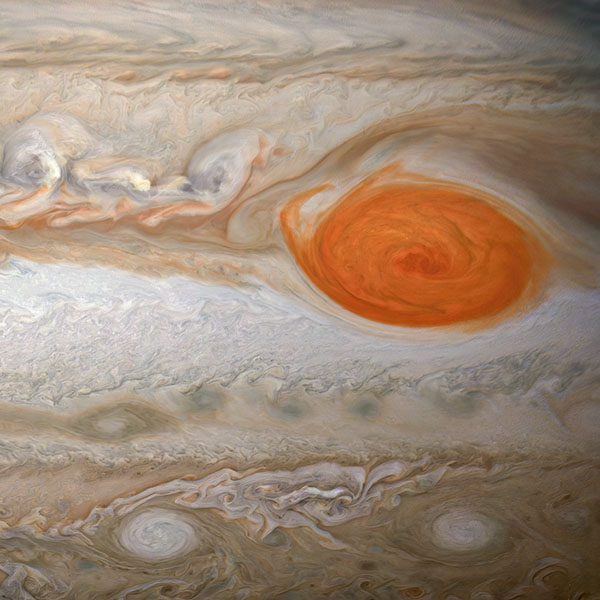
The Great Red Spot is an iconic feature on Jupiter. It is a very large storm which has been raging for hundreds of years, perhaps over 300 years. It is twice as wide as the earth, and it has extreme winds up to 400 mph. Aside from its size and wind speeds, one of its most well known features is its red coloring. It is suspected that ammonium hydrosulfide may be a contributor to this coloration, but it is not fully understood what gives the storm its color.
Moons of Jupiter
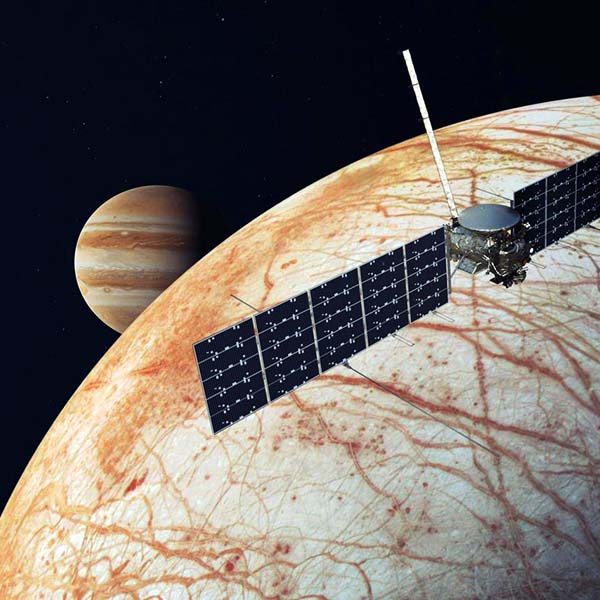
Jupiter has the most moons out of the planets in the solar system. As of February 2023, there are 92 confirmed moons. 57 of these moons have been given official names by the International Astronomical Union. Jupiter’s four largest moons include Io, Europa, Ganymede, and Callisto. These four moons were first observed in 1610 by Galileo Galilei. Io is very volcanically active, Ganymede is the largest moon and it is even larger than the planet Mercury, Callisto is heavily cratered, and Europa has the ingredients for potential life with its liquid water ocean underneath a frozen crust. These moons make for an interesting place to travel outside of Jupiter. They all have something interesting to explore.
Colorful Bands
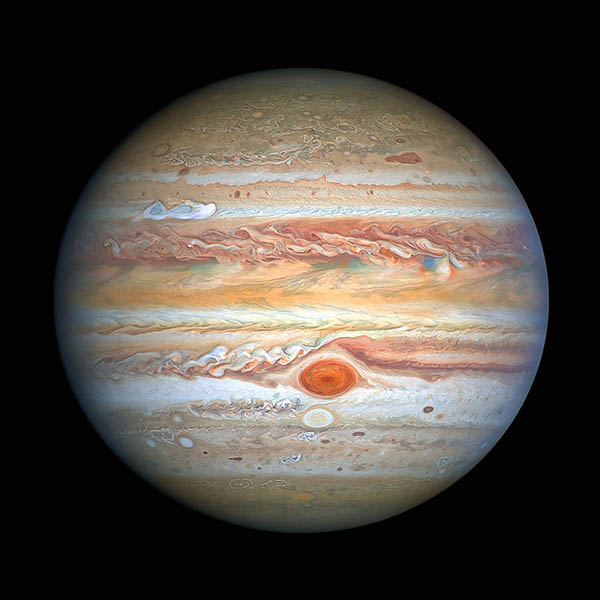
Jupiter is full of colorful bands and storms. It has three distinct cloud layers which are made of ammonia ice, ammonium hydrosulfide crystals, and water ice/vapor, respectively. It has distinct bands of light zones and dark belts which are separated this way due to the planet’s fast rotation of just under 10 hours. Also, due to the lack of surface to slow them down, these winds and storms can persist for hundreds of years, like the Great Red Spot. These bands also have vivid colors which are thought to stem from the gases containing sulfur and phosphorus which rise from the warm interior of the planet.
Jupiter’s Auroras
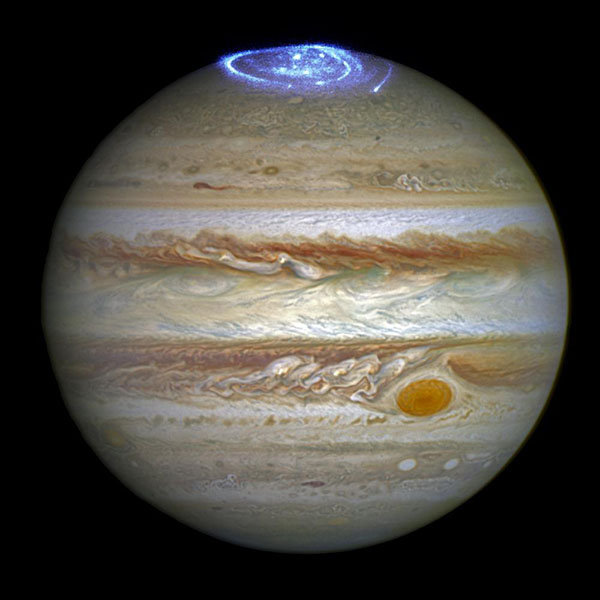
Although Jupiter is widely known for its colorful bands or its famous great red spot, at Jupiter's poles, there are also stunning aurora light shows. The auroras are caused by high energy particles entering the planet's atmosphere near the magnetic poles which then collide with atoms of gas. They are highly energetic, hundreds of times more energetic than earth's auroras, they are large in size, and they never cease. They are a beautiful sight to behold on a trip to Jupiter!